#1 #2 #3 #4

Sovereign AI Governance for Regulated Industries

Your data stays where it belongs. Your AI does what it’s told. Every decision auditable, every permission enforced, every query scoped to exactly what each person is entitled to see.

Read on

#1

Make Intelligence Safe Again

The ancient art of knowing what not to say.

“Here’s a good rule of thumb:
Too clever is dumb.”

— Ogden Nash

There was once a parrot who could recite the entire terms of service of a major bank. Every clause, every sub-clause, every tortured definition of “material adverse change.” The parrot was the talk of the trading floor. The board loved it. Then one afternoon, during a client lunch, the parrot disclosed Material Non-Public Information about a pending acquisition. The parrot is now reciting the house rules at Broadmoor.

This is, more or less, the situation in which a great many enterprises now find themselves. They have deployed intelligence—considerable, occasionally dazzling intelligence—whose chief shortcoming is that it doesn’t know what not to say.

Well, nobody like a know-it-all. Your new AI assistant can summarise a hundred-page regulation in four seconds, which is wonderful. It can also, if asked nicely, summarise your client list for anyone who phrases the question with sufficient charm. The same capability that makes it useful makes it dangerous, a sharp-bladed axe with an ill-fitting handle .

Nobody ever got promoted for installing brakes.

And so we arrive at the curious paradox of the AI age: the companies that moved fastest are now the most exposed. They bolted rocket engines to their workflows and forgot the brakes. Not because they were foolish—the engines really are magnificent—but because brakes are boring, and nobody ever got promoted for installing them.

The parrot that knows everything and guards nothing isn’t an asset. It’s a breach waiting for an audience.

What’s needed is not less intelligence, but situated intelligence—intelligence that knows its context, respects its boundaries, and understands that discretion is not a limitation but a feature. A system that can tell the difference between what you can say and what you should say. Between data you have and data someone is entitled to see.

This is what Bowdlr builds. Not a muzzle. A conscience. A governance layer that sits between your AI and your data and asks, politely but firmly, on every single request: who is asking, what are they allowed to know, and can we prove we checked?

It turns out that making intelligence safe is not the opposite of making it useful. It is the precondition. The companies that will win the next decade are not the ones with the most powerful AI. They are the ones whose AI can be trusted in the room when the adults are working.

Too clever is dumb. But clever and careful? That’s already a safer world.

A black Bowdlr bowler hat beside a red cap reading Make Intelligence Safe Again
Choose your headwear wisely.
· · ·

#2

A white Bowdlr bowler hat above the text Le Roi Est Mort, Vive Le Roi

The Return on Governed Intelligence

Most AI investments are not failing. They are succeeding at things nobody can use.

The average large enterprise spent somewhere north of forty million on AI last year. The figure is imprecise because nobody is entirely sure what counts. Licensing fees, certainly. Infrastructure, yes. The internal teams assembled to wrangle it all into production—those too. And then there is the less quantifiable cost: the projects that worked beautifully in a sandbox and died quietly the moment someone from Legal asked who was liable for the outputs.

This is the real AI ROI problem, and it has nothing to do with the technology (well, maybe just a little). The models are extraordinary. The capabilities are genuine. What kills the return is the last mile—the gap between what AI can do and what any decent compliance framework will allow it to do. In regulated industries, that gap is not a crack. It is a canyon.

Consider an investment bank that builds a brilliant research summarisation tool. It works. It is fast, accurate, and the analysts adore it. But it cannot be deployed to clients because nobody can certify which data sources fed each summary, whether any of them contained restricted information, or how to reconstruct the decision chain if a regulator comes asking. The tool sits behind a login that three people have access to. Hence this infernal rate of return

ai.gap sits between what AI can do and what you want it to.

The pattern repeats across every regulated vertical. Law firms build document review systems that cannot touch client-matter privileged material without manual gatekeeping. Insurers train Claims models they cannot explain to the FCA. Banks deploy customer-facing assistants and then throttle them so aggressively that customers would be faster with a telephone.

The common thread is not technological failure. It is governance absence. These organisations did the hard part—building capable AI—and then discovered that capability without permission architecture is a stranded asset. A car that — but for its ripped tyre — would have aced its MOT.

What changes the equation is a layer that makes AI usable in the environments where it is most valuable. Not by relaxing the rules, but by encoding them. A governance gateway that knows, for every request, who is asking, what they are entitled to see, which regulations apply, and whether a full audit trail has been preserved. When that layer exists, the research tool can go live. The document review handles privilege automatically. The customer assistant serves real answers because it has been given real boundaries.

The return on AI has never been a technology problem. It is a permission problem. Solve the permissions, and the investment that was already made begins to pay for itself.

Long live the return.

· · ·

#3

The Advantage of Arriving Second

The quiet wisdom of those who waited, and the infrastructure that waited for them.

In the spring of 2023, half the City lost its mind. Every bank, every fund, every consultancy announced an AI strategy within the same fortnight, as if they had all received the same memo, which in a sense they had. The technology was real. The urgency was real. What was not real was any coherent idea of how to deploy it inside an environment where the FCA, the PRA, and the Legal Services Board would all have opinions.

Those firms moved fast. Some of them moved impressively. And a great many of them are now sitting on AI deployments they cannot extend, cannot fully audit, and cannot connect to their actual data without a compliance officer in the room holding a whistle.

Meanwhile, you waited.

Perhaps it didn’t feel like strategy at the time. Perhaps it felt like caution, or indecision, or simply having other priorities. But here is the thing about regulated industries and new technology: the first to deploy is rarely the first to benefit. The first to deploy is the first to discover all the ways it doesn’t work yet. The benefit accrues to whoever arrives once the road has been built.

Ask not for whom the train waits—
It waits for thee.

— not John Donne, not TfL
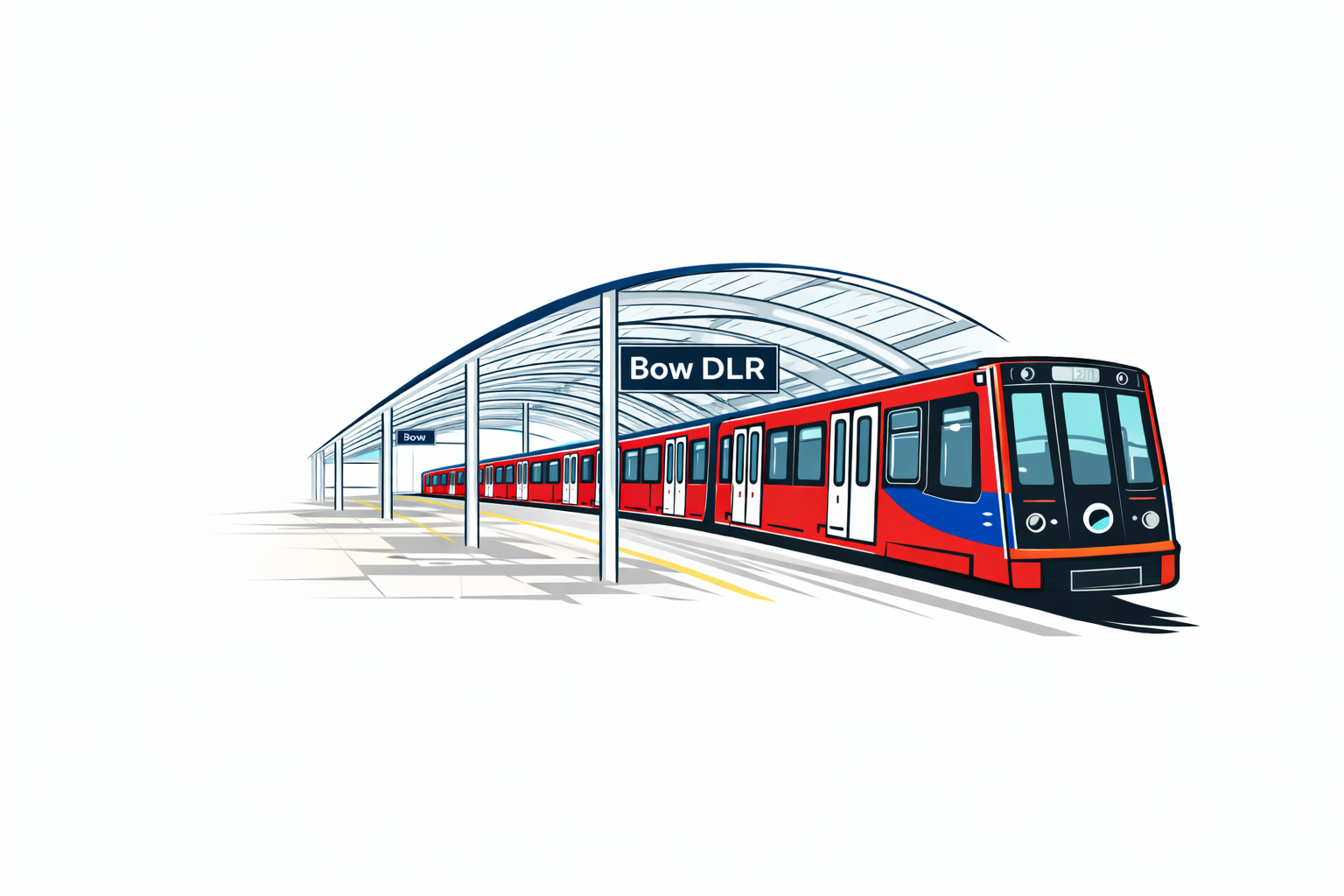
Illustration of a DLR train at Bow station

The rails, as it happens, have now been laid. Not the models—those have been ready for a while. What has arrived is the governance infrastructure: the permission layers, the audit frameworks, the sovereign data controls that let AI operate inside a regulated environment without requiring a permanent human chaperone. The plumbing that the early adopters had to improvise, or do without.

This means that a firm starting today can deploy AI that is auditable from day one, compliant by design rather than by afterthought, and scoped to precisely the data each user is entitled to see. No legacy of ungoverned prototypes to clean up. No architectural debt from the scramble of 2023. A clean deployment on proper rails.

The early movers paid the tuition. You get the degree.

There is a particular satisfaction in discovering that patience, which felt at the time like falling behind, was in fact the soundest engineering decision available. The infrastructure wasn’t ready. Now it is. And the train, it turns out, has been waiting at the platform all along.

· · ·

#4

Keeps Your Delicates Separate

The under-appreciated wisdom of showing people only what they are entitled to see.

A solicitor, a junior analyst, and a managing director walk into the same database. This is not the beginning of a joke. It is a Tuesday morning at most large firms (since they had all WFHed on Monday), and the punchline is that all three of them can see exactly the same things.

In the physical world, we understood separation instinctively. Client files lived in locked cabinets. The combination was known to the partner and to God, in that order. Privileged documents did not wander into the wrong hands because they did not wander at all. Access was governed by architecture—walls, locks, the secretary who knew everything and told nothing.

Then we digitised, and the walls came down, and we replaced them with things called “access controls”— and added Makers and Checkers and zero-trust password-rotating gizmos. We complained about the technological friction, the difficulty of remembering it all... but is only when we see a glib AI agent read, summarise, cross-reference, and serve that file to anyone who asks a sufficiently well-phrased question that we realise that friction was what kept us grounded

A public laundromat, where every customer's clothes go into the same device.

AI changes the nature of the problem. It is not enough to know who has permission to see a document. You need to know who has permission to see a field within a document, under which regulatory regime, at what time, in which jurisdiction, and whether the act of showing it triggers a reporting obligation. A solicitor may see her position. A compliance officer may see the counterparty. A client may see the return. The same underlying data, three entirely different views, each one legally required to be exactly what it is and nothing more. It was always thus, except that now, with faceless agents serving answers from a pile of facts that lie chunked in the same vector DB, it is that much more urgent./p>

This is what Bowdlr calls entitlement-scoped access—not the blunt instrument of “can this person see this file,” but the precise question of what, exactly, this person is entitled to see within the information that exists. Field-level. Jurisdiction-aware. Temporally bound. Auditable down to the individual query.

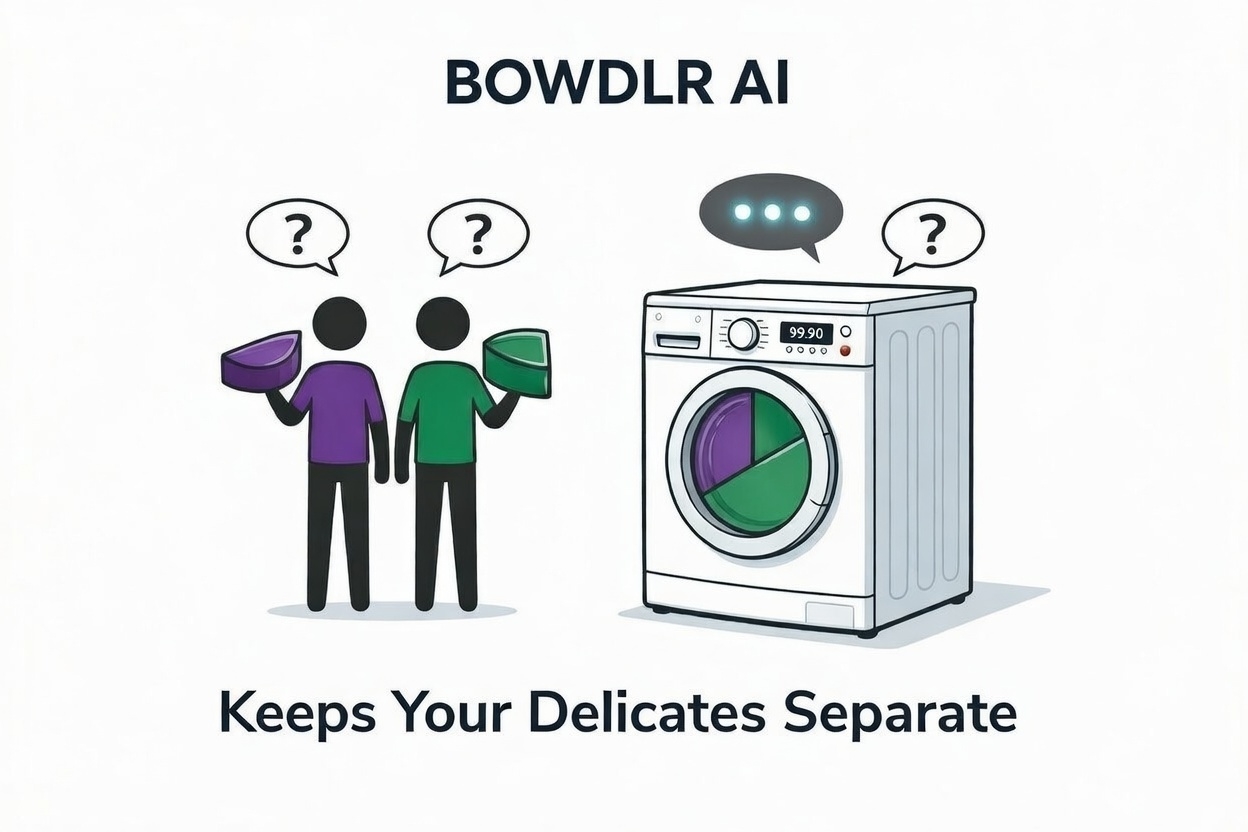
It is, if you like, the difference between a washing machine with a combined load and one in which the red socks are kept away from the whites. The former is faster. The latter is the one whose results you can actually wear to work.

Bowdlr AI: two figures with data, a smart washing machine keeping their delicates separate
Ai.gap — keeps your delicates separate.

Ready to govern your intelligence?

Bowdlr is the sovereign AI governance gateway for regulated industries. Permission-based. Auditable. Built for the room where it happens.

Explore the platforms Get in touch